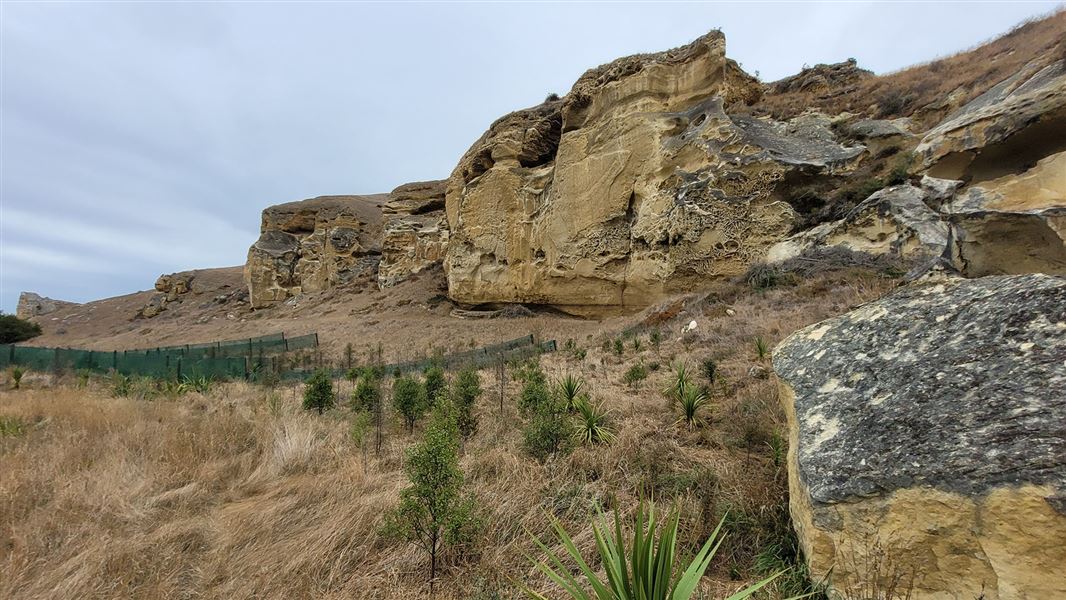

There are over 152 limestone plant species.
More than 50 of these are ranked Nationally Critical, the highest threat level in New Zealand. Many are hanging on the brink of extinction.
Many are found at a single site and 61 plants are still awaiting official names.
We need your help
Limestone plant species are on the brink of extinction. Donate to help save the limestone ecosystems and their precious species.
DOC and the New Zealand Nature Fund are working together to protect these ecosystems.
Features of limestone ecosystems
Limestone ecosystems consist of landforms such as cliffs, rocky slopes, and flat rock surfaces made mostly of calcium carbonate. These often form spectacular landscape features scattered in small, isolated patches across Aotearoa New Zealand. These precious ecosystems are rare and in decline, along with the biodiversity they harbour.
As well as being visually striking, they are culturally important and offer commercial and recreational value. Many are considered sacred (wāhi tapu) and have special spiritual significance for mana whenua. They are also true biodiversity gems with many rare species.
Limestone plant species
Population: There are over 152 limestone plant species. More than 50 of these are ranked Nationally Critical, the highest threat level in New Zealand. Many are found at a single site.
New Zealand status: Endemic
Conservation status: Nationally Critical
Threats: Invasion by pasture weeds, herbivory from stock and pests, human impact, habitat loss, disease
Other threats: Weather events and climate change effects, swarding grass invasion creates extremely high fire risk
Restoring limestone ecosystems
Since 2020, DOC has been working alongside Te Rūnaka o Moeraki to explore ways to restore and manage two sites in Canterbury:
- Wai o Toura/Gards Road Scenic Reserve (19 hectares)
- Waipata/Earthquakes Scientific Reserve (27 hectares).
Both reserves are culturally significant and home to Nationally Critical plant species like the Waitaki broom and limestone gentian. While current efforts are barely holding the line, applying this work at a greater scale will turn the tide and restore a fully functional, self-sustaining ecosystem.
Restoring these areas will not only safeguard endangered ecosystems but also provide a best-practice guide for similar projects across the country. It would create healthy habitats for unique species to thrive and give many threatened species a new lease on life.
The smaller Wai o Toura Reserve is an ideal site to demonstrate the benefits of landscape scale ecosystem restoration; the site is fully fenced, stock grazing has been removed and there is ongoing browsing animal (rabbits and hares) and woody weed (broom, gorse and boxthorn) control.
If successful, future work can be further scaled-up to restore the Waipata Scientific Reserve, the second DOC site in the Waitaki Valley, as well as other limestone ecosystems across the country, using what's learnt from the restoration activities at Wai o Toura.