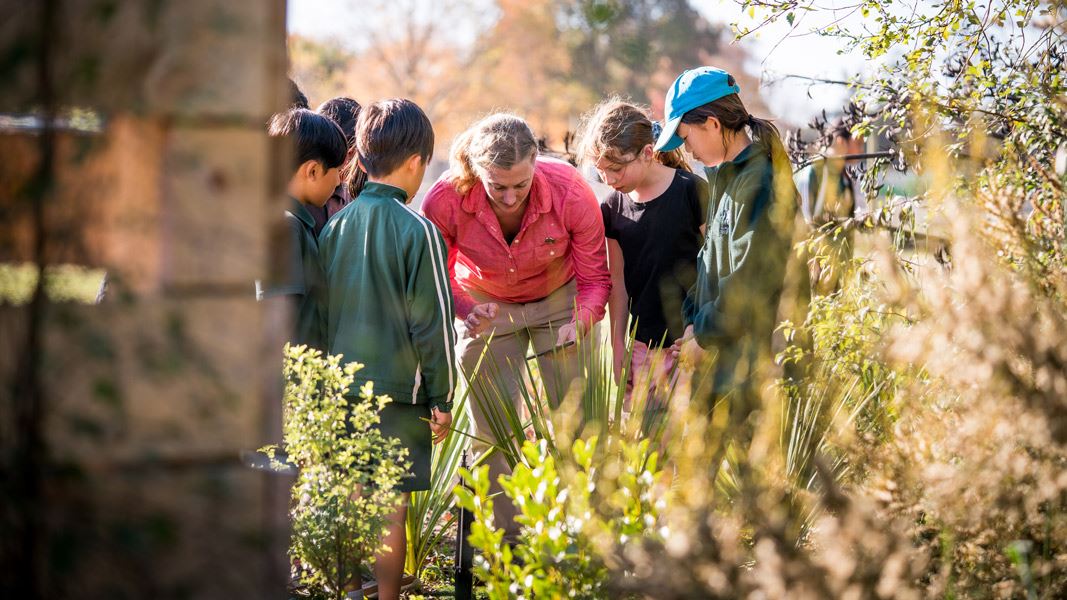
How to access education resources for three sites in Abel Tasman National Park.
We are an Enriching Local Curriculum (ELC) provider operating within the unique alpine environment of Aoraki/Mount Cook.
Get details of Enriching Local Curriculum (ELC) education programmes in Aoraki/Mount Cook for junior school students in years 1-10.
Get details of Enriching Local Curriculum (ELC) education programmes in Aoraki/Mount Cook for secondary school students in years 11-13.
This resource provides ideas and learning experiences to enhance the native and endemic biodiversity in your green space.
How can you address an issue to make a positive difference for your estuary?
Why are estuaries important for Māori?
Use this resource to experience birds in your school grounds or another local green space.
Use this resource to experience invertebrates (insects) in your school grounds or another local green space.
Use this resource to experience native trees in your school grounds or another local green space.
This resource supports outdoor exploration of a local green space.
This resource supports outdoor exploration of a local marine environment.
This resource supports outdoor exploration of a local stream.
Use this resource to learn about and develop connections to a local green space.
A series of posters to support learning about Auckland's unique animal life, and to encourage outdoor exploration.
View education resources for field trips to Deep Cove, the Kepler Track and Borland Lodge.
Find out how we can tell if an estuary is healthy
This resource is designed to introduce secondary students to New Zealand’s extraordinary alpine environments, and support them to take action to help protect them.
Use this resource to investigate introduced predators in your school grounds or another local green space.
Use this resource to investigate weeds in your school grounds or another local green space.
These posters and booklet include te reo Māori and English words and phrases about the environment: Te Ao o Tangaroa – Marine, Wai Māori – Fresh Water, Te Wao Nui a Tāne – flora, Te Tini a Tāne - fauna
Take a trip outside the classroom and learn about Marlborough's natural and historic heritage.
Have fun exploring and learning outside with these engaging seasonal slideshows.
Use these to support student viewing the albatross 'Royal cam'.
How to organise an Enriching Local Curriculum (ELC) visit.
Use this resource to learn about, explore and protect our unique estuarine environments.
Use this resource to learn how to protect our unique marine environment.
This resource can help you plan, implement and take action on restoration projects throughout the school year.
This resource is an integrated unit of teaching and learning material about the tāiko/black petrel and other seabirds, for use in primary schools.
Te whio mō ake tonu atu – he rauemi mā ngā Kura Kaupapa Māori
What can we conclude about our estuary and how can we share our findings?
Let's apply our learning to create a positive future for our local estuary
Use this resource to plan and carry out successful environmental action, alongside your local community.
What can we experience at our local estuary and what data can we collect there?
Information to help plan your educational visit to a local estuary, and a list of key terms and definitions used throughout this resource.
Wet Feet is about involving schools and communities in the care and restoration of freshwater systems.
The wetland life poster features native species living in a lowland swamp – birds, fish, invertebrates and plants.
Take your students on an amazing learning journey, discovering why the whio/blue duck is so important to New Zealand.